Best Privacy-Friendly & Cookieless Analytics Tools (2026)
Privacy-friendly analytics platforms measure visitor traffic, referrers, and conversion goals without setting third-party cookies or collecting personal identifiers. They keep your website lightweight while focusing on essential traffic metrics.
How this list works: Products in this guide are curated by functionality and ordered by community upvotes on Bidora.
Feature & Pricing Comparison
5 Tools Compared| Product | What It Does | Pricing Model | Community Rank | Listing |
|---|---|---|---|---|
 Fathom Analytics Developer Tools | Privacy-first website analytics | — | — | View |
 Pirsch Analytics Developer Tools | Cookie-free analytics for developers | — | — | View |
 Plausible Analytics Developer Tools | Lightweight, cookie-free web analytics | — | — | View |
 Simple Analytics Developer Tools | Cookieless analytics that respects visitors | — | — | View |
 Umami Developer Tools | Open-source analytics, self-hosted or cloud | — | — | View |
Detailed Product Profiles

Privacy-first website analytics
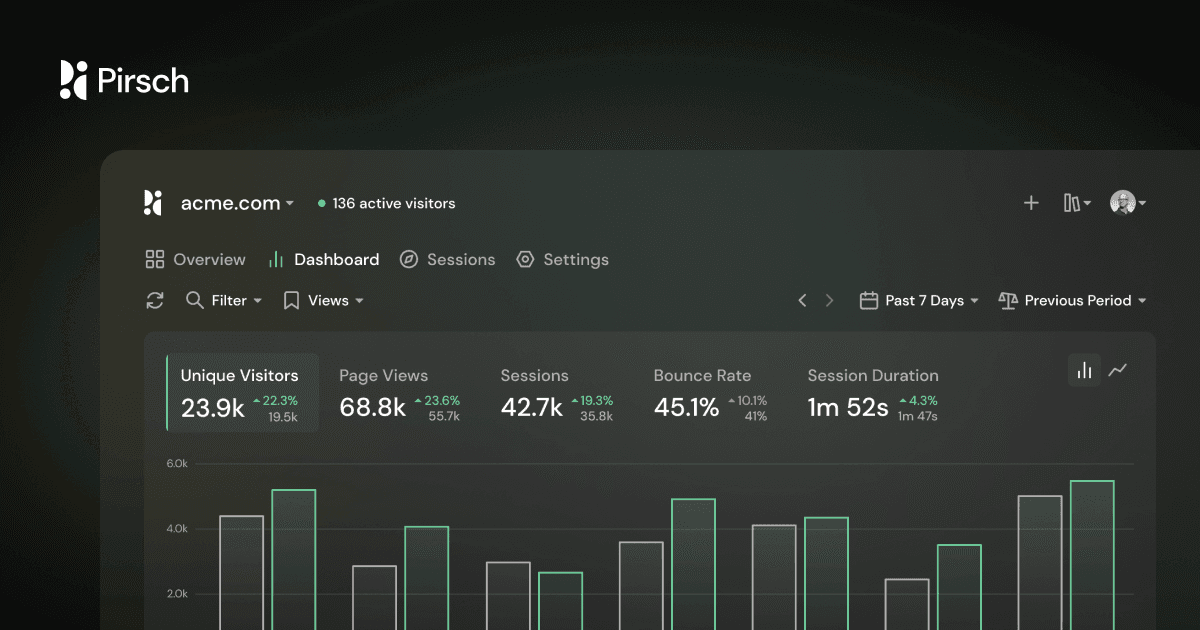
Cookie-free analytics for developers

Lightweight, cookie-free web analytics

Cookieless analytics that respects visitors

Open-source analytics, self-hosted or cloud
Questions & Buying Advice
Q1:What makes an analytics tool privacy-friendly and cookieless?
Privacy-friendly tools do not store persistent identifiers or cross-site tracking cookies in the visitor’s browser. Instead, they aggregate pageviews using privacy-focused measurement methods, meaning visitors are not tracked across different websites.
Q2:Do cookieless analytics tools require a GDPR cookie banner?
Cookieless tools can reduce the need for consent banners depending on configuration and local law. This is not legal advice; always check your regulator’s guidance and consult legal counsel for your specific implementation.
Q3:Can I self-host privacy-friendly analytics?
Yes, tools like Umami and Plausible Community Edition offer open-source editions that can be self-hosted on your own infrastructure or cloud servers.
Q4:How do privacy analytics compare in script size to traditional analytics?
Privacy analytics scripts are typically much smaller and lighter than traditional multi-feature tracking suites, helping reduce page load overhead and keep pages fast.
Explore Related Software Guides
Uptime & Monitoring
Uptime monitoring tools, public status pages, cron job heartbeats, and error tracking dashboards help notify teams when an endpoint is down or a background job misses its schedule.
Developer Tools for Indie Hackers
A curated stack of developer tools built for solo founders and indie hackers: SaaS starter templates, authentication providers, cloud hosting, payment checkouts, and production observability.
Backend & Database
Modern backend-as-a-service platforms, headless CMS engines, and serverless databases help simplify backend infrastructure so you can focus on building user-facing features and shipping products faster.